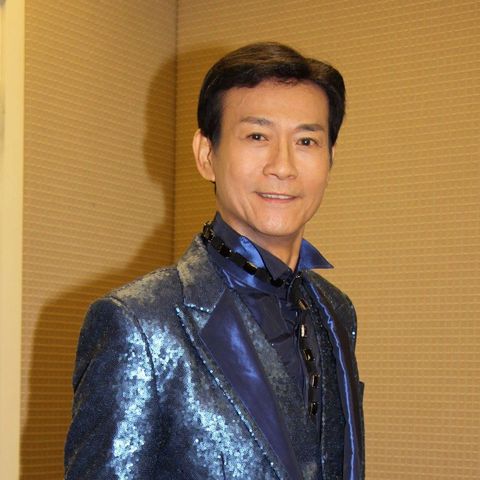
Adam Cheng
A Hong Kong, China-based actor and singer. His singing career is deeply intertwined with the golden age of Hong Kong television dramas, and he has performed the theme songs for many widely popular martial arts dramas. His singing style blends traditional Cantonese opera pronunciation with modern pop music, making him one of the iconic figures in the early development of Cantonese pop music.
About
郑少秋 (Adam Cheng), born on February 24, 1947, in Hong Kong, is a renowned actor and pop singer. He entered the film and television industry in the late 1960s and, as Hong Kong’s television industry took off, became a widely popular leading man in TV dramas, frequently performing the theme songs and insert songs for the series in which he starred.
郑少秋’s discography consists primarily of Cantonese pop songs, with theme songs for martial arts and period dramas forming the core of his repertoire. Having received traditional vocal and opera training in his early years, he often retained some of the traditional Cantonese opera techniques—such as precise enunciation and drawn-out notes—when performing pop songs. Combined with melodies and lyrics imbued with traditional Chinese charm, composed by musicians such as Gu Jiahui and Huang Zhan, he developed a unique singing style characterized by grandeur, chivalry, and tenderness.
His representative works, such as *Chu Liuxiang*, *The Legend of the Condor Heroes*, and *The Wheel of Life*, are widely sung in Hong Kong and overseas Chinese communities. The studio versions of these works were mostly released by local labels such as Entertainment Records, forming an important part of the Hong Kong pop music market in the 1970s and 1980s.
During the formation and development of Cantonese pop music (Canto-pop) in the mid-to-late 1970s, television songs were a key driving force behind the industry’s maturation. Historical records and industry consensus indicate that 郑少秋, as one of the core performers of “television songs” during that period, played a significant role in promoting the popularity of Cantonese pop music throughout the Chinese-speaking world. Not only was he an early exemplar of a dual career in both entertainment and music, but his recorded works are also regarded as an important audio archive of Hong Kong’s golden age of popular culture.
Works
No works collected yet