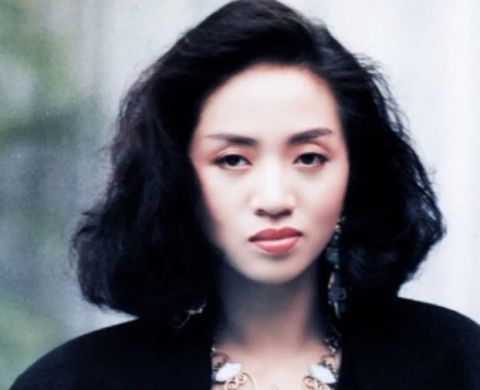
Anita Mui
A female singer and actress from Hong Kong, China, hailed as the “Daughter of Hong Kong” and the “Diva of a Thousand Faces.” She debuted in 1982. With her avant-garde visual concepts, distinctive low-to-mid-range vocals, and commanding stage presence, she completely revolutionized the traditional image of female Mandarin-language singers and became a legendary superstar during the golden age of the Hong Kong pop music scene in the 1980s and 1990s.
About
Anita Mui (Anita Mui), born on October 10, 1963, in Hong Kong, is a legendary female singer in the Chinese-language pop music scene and a renowned actress. From a young age, she performed with her family at amusement parks, dance halls, and nightclubs, developing exceptionally strong live performance skills. In 1982, she participated in the first New Talent Singing Contest co-organized by Hong Kong’s Television Broadcasts Limited (TVB) and Huaxing Records, winning the championship with the song “Season of the Wind.” She immediately signed with Huaxing Records, officially launching her career as a professional studio singer.
Anita Mui’s vocal qualities were extremely rare in the Chinese music scene at the time. She possessed a wide mezzo-soprano range with a deep, rich tone that carried a hint of world-weariness and was exceptionally penetrating. During her time at Huaxing Records, renowned music producer Li Xiaotian crafted a tailored development path for her. Her 1983 album *Red Anita Mui* achieved breakthrough platinum sales, and subsequently, her discography began to showcase an astonishing range of musical styles. Not only could she perform grand, lyrical ballads imbued with the melancholic beauty and distinctive aesthetic of Eastern cinema—such as “Years Like Flowing Water,” “The Red Lipstick,” and “Song of the Setting Sun”—but she also incorporated a wealth of Japanese pop covers, Western synth-pop, and rock elements.
The greatest innovation she brought to the Hong Kong pop music industry was the comprehensive introduction of “concept albums” and “holistic visual concepts.” Through in-depth collaboration with top image designer Liu Peiji, Anita Mui, upon releasing albums such as *Leap onto the Stage*, *Bad Girl* *Enchantress*, and *Fiery Red Lips*, she deeply integrated musical style, lyrics, choreography, and strikingly avant-garde looks (such as men’s suits, sexy lingerie worn as outerwear, and Middle Eastern-inspired styles). This “versatile diva” branding strategy shattered the one-dimensional image of early Hong Kong female singers—typically gentle and melancholic—and elevated the visual aesthetics and stage performances of the Hong Kong pop music scene to an international standard.
Anita Mui’s work also frequently touched upon shifts in social ideology in subtle ways. Her signature song “Bad Girl” (1985) was initially banned from radio play due to lyrics that boldly addressed female sexual autonomy, but the album ultimately set a historical record for physical record sales in Hong Kong. It is widely acknowledged in academic circles that Anita Mui’s music and stage persona greatly contributed to the awakening of feminist consciousness in Hong Kong society and subverted traditional gender norms.
In 1990, after sweeping the music industry’s top honors for many years, Anita Mui announced her withdrawal from all pop music award competitions, shifting her focus instead to live concerts, musical theater productions, and mentoring younger artists. Numerous Hong Kong singers, including Grasshoppers, Andy Hui, and Denise Ho, have benefited from her systematic guidance and financial support. Her live concerts—particularly her record-breaking run of consecutive shows at the Hong Kong Coliseum—are regarded as the pinnacle of Hong Kong’s live performance industry.
In late 2003, after being diagnosed with a terminal illness, Anita Mui held eight “Anita Mui Classic Hits Concerts” at the Hong Kong Coliseum as her farewell performances. The closing scene, in which she sang “Song of the Setting Sun” while wearing a wedding dress, has become one of the most iconic visual moments in the history of Chinese-language pop music. Anita Mui spanned multiple historical periods, from Hong Kong’s economic takeoff to the post-handover era, and her personal stage career is widely regarded as a microcosm of the heyday of Hong Kong’s pop culture.