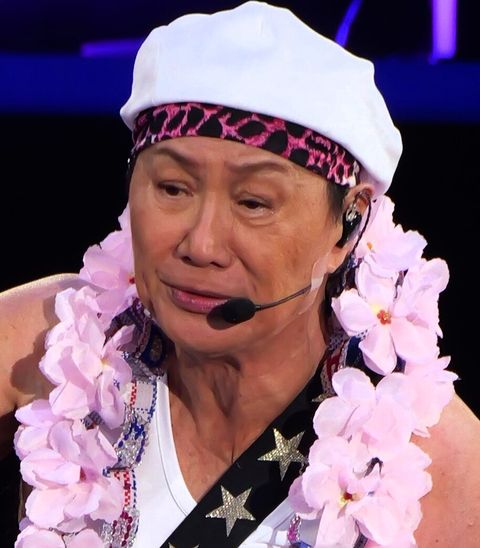
Sam Hui
A legendary male singer, songwriter, and renowned actor from Hong Kong, China, revered in the Hong Kong pop music scene as the “First-Generation God of Song.” In the 1970s, by blending Western rock arrangements with Cantonese slang lyrics, he ushered in an era of commercialization and mass appeal for modern Cantonese pop music, establishing himself as the undisputed pioneer of Hong Kong’s modern recording industry.
About
Sam Hui (Sam Hui), born on September 6, 1948, in Guangzhou and raised in Hong Kong, is a legendary superstar who holds an unparalleled and pioneering status in Hong Kong’s pop music and film and television industries. Before the 1970s, Hong Kong’s record market and high-end entertainment venues were virtually monopolized by English-language songs and Mandarin-language period tunes, while Cantonese pop songs were long regarded as vulgar, lowbrow folk tunes unfit for refined circles. The emergence of Sam Hui fundamentally upended this cultural hierarchy.
In 1971, Sam Hui graduated from the University of Hong Kong; his strong background in English and literary cultivation gave him a perspective capable of bridging Chinese and Western cultures. After joining Polydor Records (Polydor, the predecessor of PolyGram), he creatively blended the rock & roll that was sweeping Europe and America, R&B, and folk-style guitar-and-vocal arrangements—which were all the rage in Europe and the United States—with lyrics that closely reflected the lives of Hong Kong’s working class and made extensive use of Cantonese dialect and slang. In 1974, he released the album *The Mischievous Duo*. This soundtrack album, based on the eponymous film directed by Hui Koon-man, sparked a phenomenon-level buying frenzy across Hong Kong. Not only did it achieve astonishing physical record sales, but it also officially heralded the dawn of the “modern Cantonese pop (Canto-pop)” era.
During his subsequent stints at PolyGram and New Art Records, Sam Hui released a dense stream of epoch-defining masterpieces such as *Half a Jin, Eight Liang*, *The God of Wealth Has Arrived*, and *The Indentured Contract*. His songwriting and lyrics possessed a striking duality: on the one hand, he keenly captured the psychology of the middle class during Hong Kong’s period of socioeconomic boom, using down-to-earth humor to satirize the ills of the time; on the other hand, he was also capable of writing aesthetic love songs imbued with the poetic imagery of traditional Chinese verse, such as *A Smile with Dimples*, *The Voice of a Prodigal Son*, and *Love Song of the Twin Stars*.
Another major contribution Sam Hui made to the Hong Kong entertainment industry was the establishment of a large-scale commercial model of “audio-visual synergy.” While his films topped the box office, their soundtracks often swept the album sales charts as well. Historians and cultural scholars unanimously agree that Sam Hui’s discography serves as the acoustic cornerstone for the establishment of Hong Kong’s local cultural identity; his vast collection of analog-era master recordings constitutes the most sacred and central cultural archive from the formative years of the contemporary Mandarin-language music industry.
Works
No works collected yet