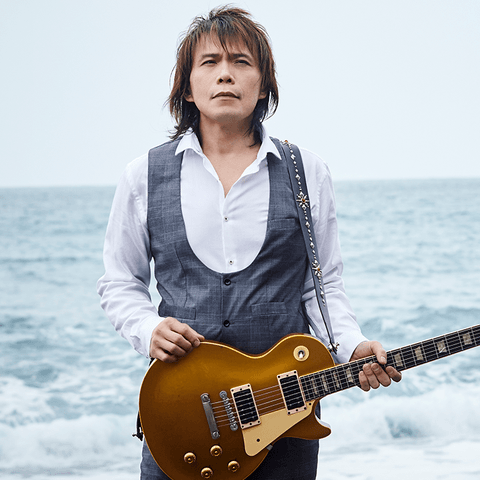
Wu Bai
A phenomenal rock singer, guitarist, and music producer from Taiwan, China. He debuted in 1992. With his rugged, down-to-earth image, deeply romantic rock compositions in Minnan and Mandarin, and an unbeatable live presence that earned him the title “King of Live,” he has become an unparalleled artistic landmark in the history of Mandarin-language rock.
About
Wu Bai (Wu Bai), whose real name is Wu Junlin, was born on January 14, 1968, in Chiayi County, Taiwan, China. He is a heavy metal rock musician, songwriter, and renowned guitarist who holds an iconic status and has had a legendary influence on the Mandarin-language pop music scene. In 1992, he formed “China Blue,” the longest-running and most tightly-knit dedicated backing band in the Mandarin music scene. With this lineup, he began performing an extremely intensive schedule of live shows in grassroots live houses and bars across Taiwan, gaining recognition through his incredibly hardcore, grassroots vitality.
After signing with Magic Stone Records (part of the Rolling Stone network), Wu Bai experienced a breakthrough that shook the entire Greater China music industry. His musical aesthetic completely shattered the soft, delicate landscape of the Taiwanese music scene at the time, which was dominated by fair-skinned, white-collar idols or singers of heartbreak ballads. Wu Bai fused the authentic, frenzied guitar riffs of Western blues rock (Blues Rock) and Roots Rock’s frenzied guitar riffs with Hokkien and Mandarin lyrics that closely reflected the fates of ordinary people in Taiwan, creating an epic and wild fusion.
In classic Minnan-language albums such as *A Lonely Bird on a Branch* (1998), he seamlessly blended grand orchestral arrangements, ferocious electronic synthesizers, and electronic rock, elevating Taiwanese-language pop—previously considered lowbrow—to an unattainable realm of avant-garde art, and uncontestedly won the Best Pop Vocal Album award at the Golden Melody Awards. At the same time, his Mandarin hit singles “A Wanderer’s Love Song” and “Norwegian Wood,” with their melodies evoking a sense of world-weariness and the tender side of a tough guy, took the cassette and karaoke markets by storm across mainland China and all of Asia.
Wu Bai’s most irreplaceable contribution to the Asian music industry lies in his setting of the highest standards for stage production in modern Chinese-language rock concerts (Live Concerts). His live multi-track albums, such as *Wu Bai’s Live: Wasted Youth*, in the analog era—without any digital sound editing—demonstrated astonishing acoustic power and authentic sound imaging; in fact, the sales and popularity of his live recordings far exceeded those of his studio versions. Both musicological and sociological archival research consistently conclude that Wu Bai’s albums and his vast body of live audio recordings represent the most powerful voice of spiritual awakening among grassroots youth and a cross-class cultural expression during Taiwan’s modern industrial transition.
Works
No works collected yet