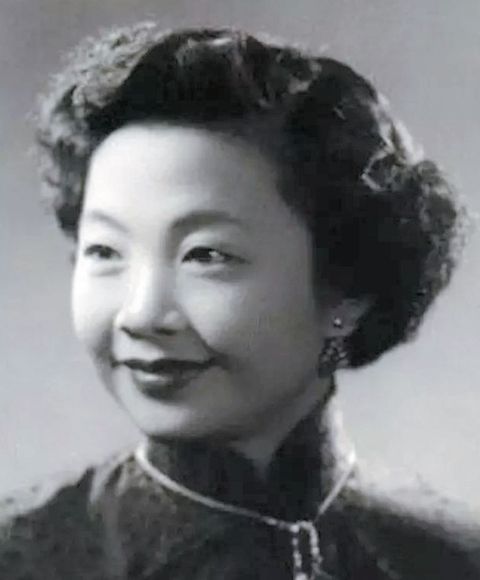
Ya Li
A legendary female singer of early Chinese popular music, known as the “Silver Voice.” She was active in Shanghai and Hong Kong from the 1930s to the 1960s. She was a pioneer in seamlessly blending Western jazz with traditional Chinese folk tunes, and her signature song, “Rose, Rose, I Love You,” was the first Chinese pop song to be covered and achieve international acclaim.
About
Ya Li (Ya Li, 1922–2019), whose birth name was Yao Xiuyun, was born in Shanghai, China. She was one of the most pioneering and internationally influential early-era pop divas in the history of Mandarin-language popular music. She was counted among the “Seven Divas” of 1940s Shanghai, alongside Zhou Xuan (“The Golden Voice”), Bai Hong, Bai Guang, and others. Ya Li displayed remarkable vocal talent from an early age; at the age of 13, she was discovered by Zhou Xuan and Yan Hua and began recording at Shanghai Pathé (EMI), then the center of the Far East’s recording industry.
Ya Li’s greatest contribution to Mandarin pop music lay in her pioneering “fusion of Eastern and Western” vocal aesthetics. Unlike most female singers of the time, who relied solely on the traditional folk singing style of pinching their voices, Ya Li drew heavily on Western jazz and blues techniques introduced to Shanghai dance halls like the Ballroom by foreign musicians. Her voice was rich and full-bodied, with a strong sense of rhythmic pulse. In 1940, “Rose, Rose, I Love You,” composed by Chen Geshin and originally performed by Ya Li, was recorded and released. This song, imbued with the swing style of American big bands, not only took China by storm, but was also covered in English by American singer Frankie Laine in 1951, reaching No. 3 on the U.S. Billboard Pop Chart—a rare miracle of cultural reverse export in the history of Chinese popular music.
In the 1950s, Ya Li moved to Hong Kong and continued to serve as a core recording artist for Pathé Records. During this period, due to vocal cord issues, her voice shifted from the crisp, high-pitched tones of her early career to a richer mezzo-soprano, yet she continued to dominate the Hong Kong Mandarin music scene of the time with classic gramophone records such as “Spring Wind Kisses My Face.” After stepping back from the spotlight, she served as a record producer and discovered rising stars like Teresa Teng.
Music archivists unanimously agree that the early 78-rpm shellac records (SP) bearing the Pathé logo, as well as the later reissues on vinyl and CD, are not only exquisite artifacts documenting the modern urban culture of the “Tale of Two Cities”—Shanghai and Hong Kong—in the mid-20th century, but also irreplaceable acoustic historical records for exploring how the Western pop music industry achieved its earliest localization in China.
Works
No works collected yet